
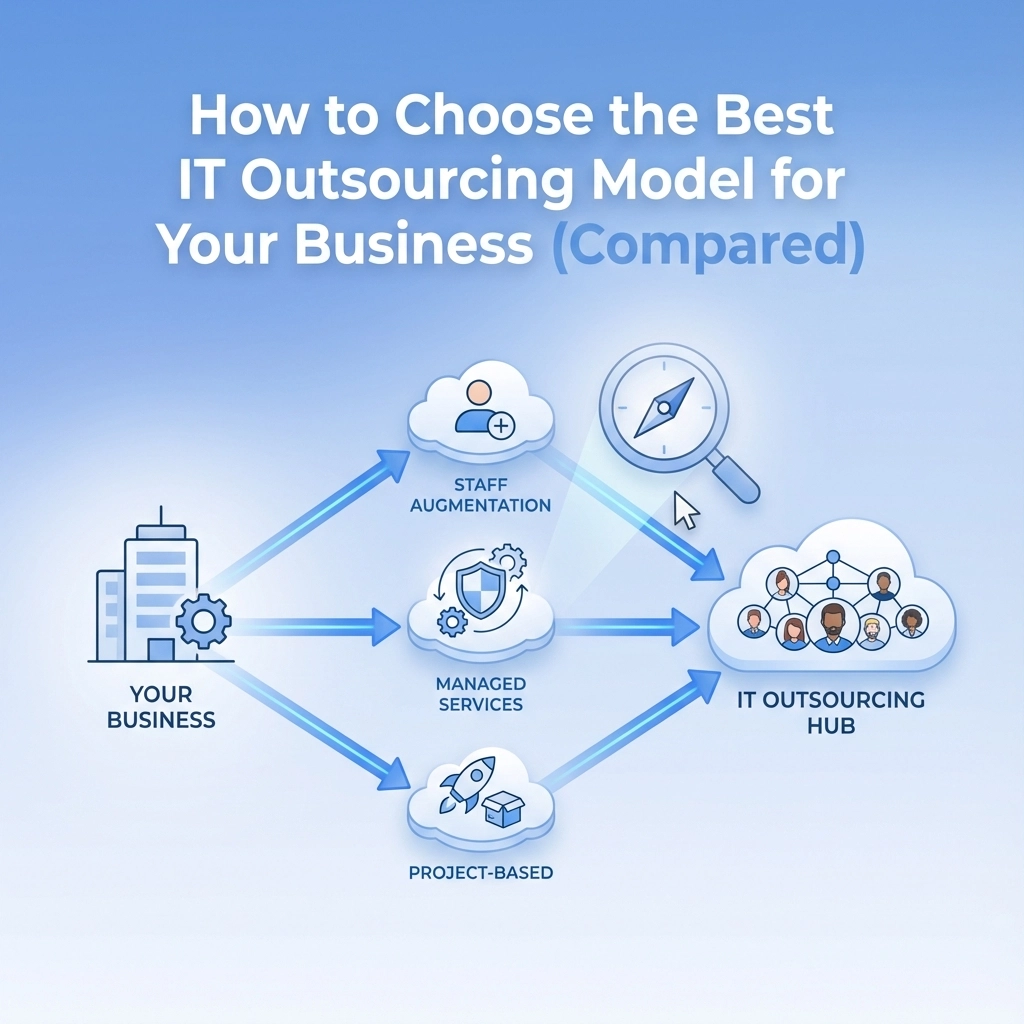
Let's be honest: choosing the right IT outsourcing model can feel like navigating a maze blindfolded. With so many options, conflicting advice, and sales pitches flying around, it's no wonder many UK businesses end up making expensive mistakes or settling for arrangements that don't quite fit.
But here's the thing: there's no one-size-fits-all solution. What works brilliantly for a 50-person marketing agency might be a disaster for a growing manufacturing company. The trick is understanding your options and matching them to your actual needs: not what someone's trying to sell you.
The Three Main IT Outsourcing Models
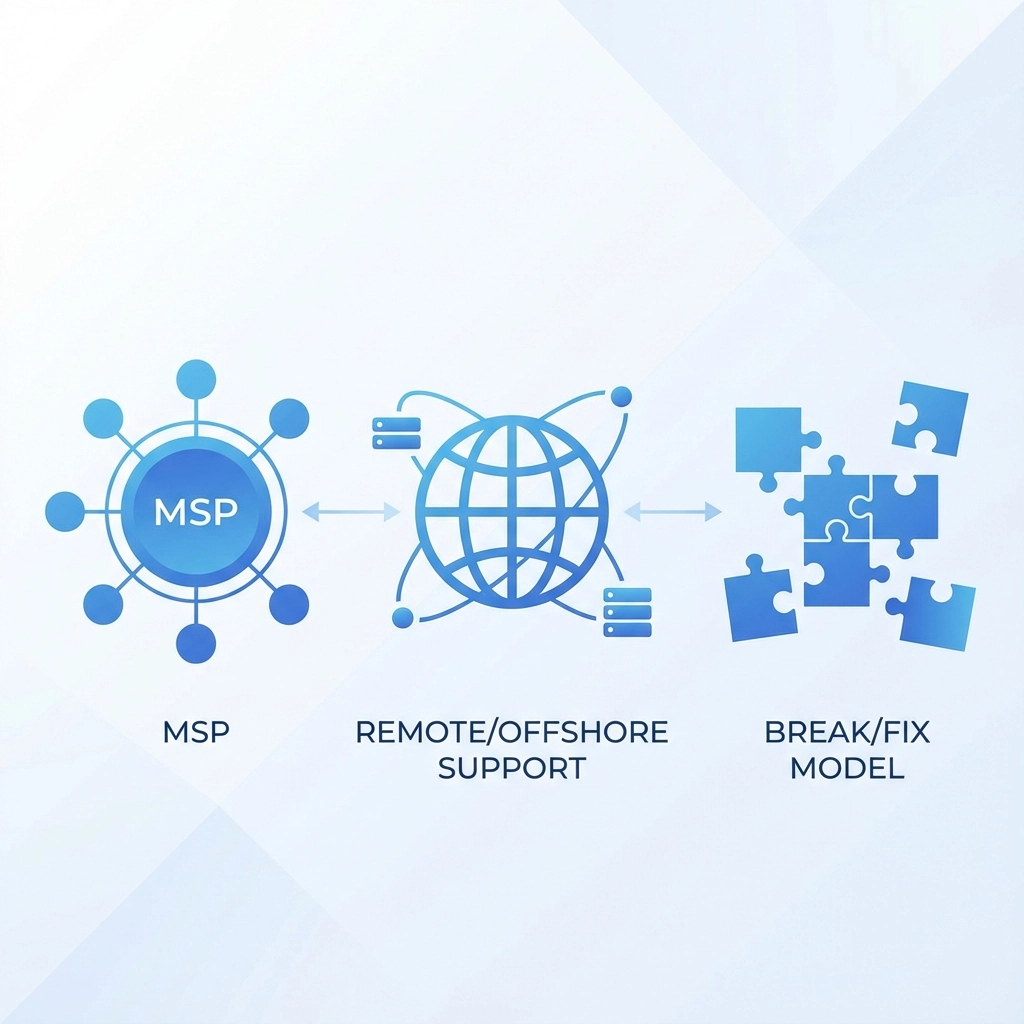
When we strip away all the marketing fluff, there are three primary models that UK businesses typically consider:
Managed Service Provider (MSP) – A comprehensive partnership where an external team takes full responsibility for your IT infrastructure, support, and strategy.
Remote/Offshore IT Support – Technical support delivered by teams based in different locations, often overseas, usually at lower cost points.
Break/Fix Model – Pay-as-you-go support where you only pay when something breaks or needs fixing.
Each has its place, but they serve very different business needs and growth stages.
Managed Service Provider (MSP): The Full-Service Approach
Think of an MSP as your external IT department. They handle everything from day-to-day support to strategic planning, security, and infrastructure management.
Advantages:
- Predictable monthly costs – No surprise bills when your server crashes on a Friday afternoon
- Proactive approach – Problems get spotted and fixed before they impact your business
- Access to specialist expertise – You get a whole team's worth of knowledge for the price of one salary
- 24/7 support availability – Someone's always there when things go sideways
- Strategic partnership – They help plan your IT roadmap, not just fix what's broken
Disadvantages:
- Higher monthly investment – Usually the most expensive option upfront
- Less direct control – You're trusting another company with critical business functions
- Contract commitments – Most MSPs want 12-24 month agreements
- Potential over-servicing – You might pay for services you don't actually need
Typical Costs:
Expect to pay £75-£150 per user per month for comprehensive managed services, though this varies significantly based on your infrastructure complexity and service levels required.
Remote/Offshore IT Support: The Cost-Effective Option
This model leverages teams based in countries with lower labour costs to provide technical support, often through remote access tools and helpdesk systems.
Advantages:
- Significant cost savings – Often 40-60% less than UK-based services
- Round-the-clock coverage – Time zone differences can provide 24/7 support naturally
- Scalability – Easy to ramp support up or down as needed
- Specialised skills – Access to specific technical expertise that might be expensive locally
Disadvantages:
- Communication challenges – Language barriers and cultural differences can slow resolution
- Time zone complications – Urgent issues might wait for business hours in another country
- Security concerns – Giving remote access to overseas teams raises compliance questions
- Limited business understanding – They know tech but might not grasp your business context
Typical Costs:
Remote support typically runs £20-£50 per user per month, making it attractive for cost-conscious businesses.

Break/Fix Model: The Traditional Approach
This is the old-school way of handling IT: call someone when something breaks, pay for the time to fix it, then wait for the next crisis.
Advantages:
- No monthly commitments – You only pay when you actually need help
- Lower barrier to entry – No upfront investment required
- Direct control – You decide exactly what gets fixed and when
- Good for stable environments – If your tech rarely breaks, costs stay low
Disadvantages:
- Unpredictable costs – A major outage could cost thousands without warning
- Reactive only – Problems aren't prevented, just fixed after they've caused damage
- No strategic support – You're on your own for planning and improvements
- Potential for extended downtime – No incentive for providers to respond quickly
- Higher long-term costs – Emergency rates and repeated issues add up fast
Typical Costs:
Break/fix typically charges £80-£150 per hour, with emergency callouts potentially costing £200+ per hour.
How to Assess What's Right for Your Business
The right choice depends on several key factors:
Business Size and Growth Stage
Start-ups and very small businesses (under 10 people) often find break/fix or basic remote support sufficient, especially if tech needs are simple and downtime isn't catastrophic.
Growing businesses (10-50 people) typically benefit most from MSP partnerships. The predictable costs help with budgeting, while proactive support prevents the kind of outages that can derail growth momentum.
Established companies (50+ people) usually need the comprehensive approach an MSP provides, though some supplement with offshore support for basic helpdesk functions.
Critical Dependence on Technology
If your business grinds to a halt when IT systems fail, you can't afford the reactive approach of break/fix. The potential revenue loss from extended downtime far outweighs the monthly cost of proactive management.
Internal IT Capabilities
Companies with existing IT staff might use remote/offshore support to handle overflow and out-of-hours coverage, while businesses without internal expertise need the full MSP treatment.
Budget and Cash Flow
MSPs require consistent monthly investment but provide predictable costs. Break/fix seems cheaper initially but can deliver nasty surprises. Remote support offers a middle ground but requires more internal coordination.
Special Considerations for Different Business Types
Growing Companies
If you're scaling rapidly, your IT needs will change fast. Look for partners who can grow with you: fixed-price break/fix arrangements often break down when your infrastructure becomes more complex. MSPs with flexible service tiers usually handle growth transitions better.
The key is finding a provider who won't lock you into yesterday's requirements but can adapt as your needs evolve.
MSPs Looking to Scale Their Own Operations
If you're an MSP yourself, you might need white-label support to handle overflow or provide services outside your core expertise. Look for partners who understand the channel and won't compete with your direct client relationships.
Whitelabel IT contract services can provide the backend support you need without compromising your brand relationship.
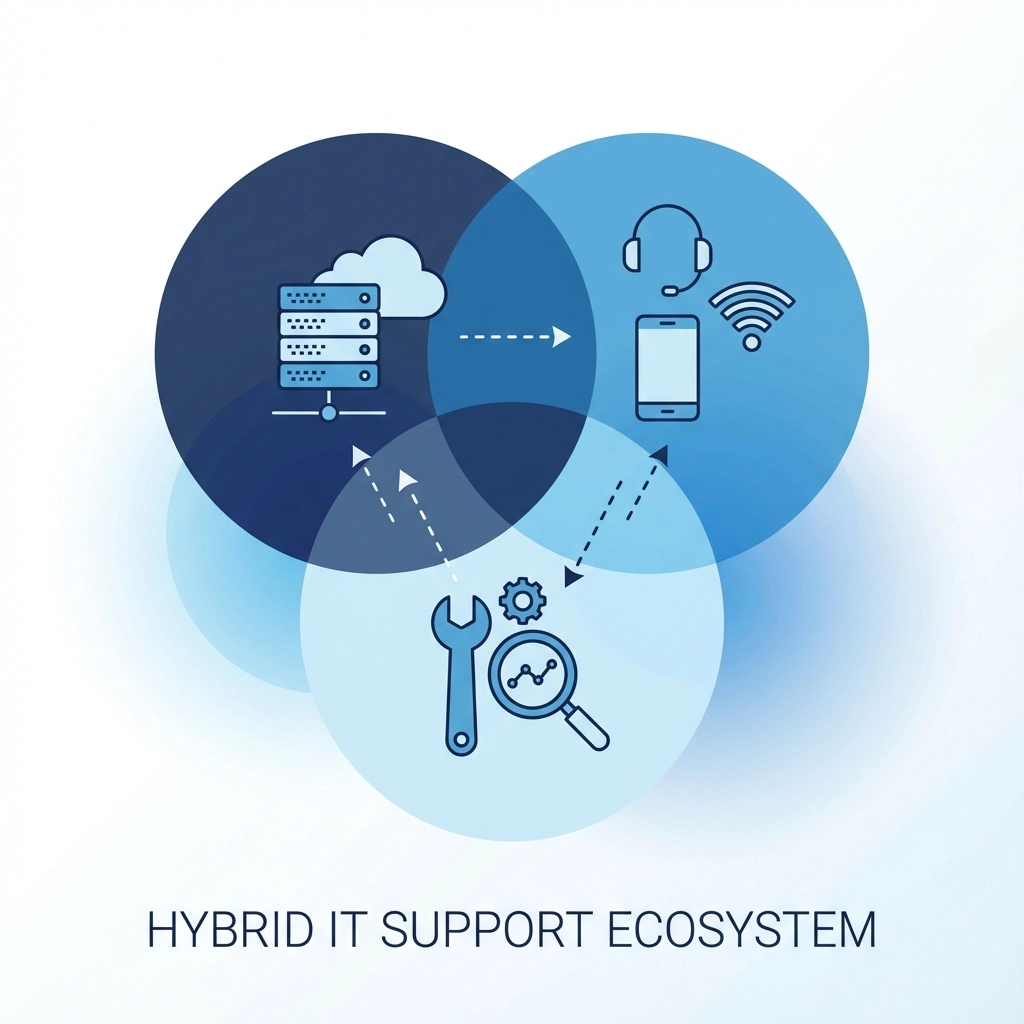
The Hybrid Approach: Best of Both Worlds
Many successful businesses don't stick to just one model. They might use an MSP for critical infrastructure and security, supplemented by offshore support for basic helpdesk functions, with break/fix available for one-off projects.
The key is ensuring all providers communicate effectively and don't create gaps in responsibility.
What Sets Apart the Best IT Partners
Regardless of which model you choose, the best providers share certain characteristics:
Provider-agnostic advice – They recommend what's actually best for your situation, not what makes them the most money.
Transparent communication – No technical jargon barriers or hidden agenda items.
Flexible service delivery – Especially important for out-of-hours support when you need help most.
Long-term partnership mindset – They're invested in your success, not just solving today's problems.
Honest about limitations – They'll tell you when you need something they can't provide rather than promising everything.

At Your IT Specialist, we've built our entire approach around these principles. We don't push one-size-fits-all solutions because we know every business is different. Sometimes that means recommending a competitor if they're genuinely better suited to your needs: that's just honest business.
Our out-of-hours support is designed to be there when you actually need it, not just during convenient business hours. And we're committed to long-term partnerships that evolve as your business grows.
Making Your Decision
Start by honestly assessing your current situation:
- How often do IT issues currently disrupt your business?
- What's your realistic budget for IT support?
- How quickly is your business growing or changing?
- What's your internal IT capability?
- How critical is technology to your daily operations?
Don't make this decision based on cost alone. The cheapest option upfront often becomes the most expensive when you factor in downtime, lost productivity, and missed opportunities.
Ready to Find Your Perfect IT Partnership?
Choosing the right IT outsourcing model isn't about finding the cheapest option or the one with the flashiest marketing. It's about finding the approach that genuinely fits your business needs, budget, and growth plans.
We'd love to have an impartial chat about your specific situation: no sales pitch, just honest advice about what might work best for your business. Whether that's working with us or pointing you toward a better fit elsewhere.
Get in touch for a no-obligation consultation, and let's figure out the right path forward for your IT needs.
