
IT outsourcing can be a brilliant move for UK businesses in 2026 – when done right. But here's the thing: we're seeing the same costly mistakes repeated time and again. Companies get dazzled by promises of massive savings, only to find themselves dealing with security breaches, hidden costs, and sleepless nights wondering if their systems are actually safe.
The truth is, the cheapest option usually isn't the smartest one. Let's dive into the most common outsourcing blunders we see businesses making, and more importantly, how to avoid them while keeping both your budget and your data secure.
Mistake #1: Chasing the Lowest Price Tag
We get it – budgets are tight, especially with the current economic climate in the UK. But here's what happens when you choose IT support based solely on price: you often end up paying twice.
That £50-per-month "unlimited support" package? It probably comes with junior technicians, offshore call centres with massive time delays, and security practices that would make a GDPR officer weep. We've seen businesses save £200 a month on IT support, only to lose £20,000 when a data breach hits because their provider skimped on security monitoring.
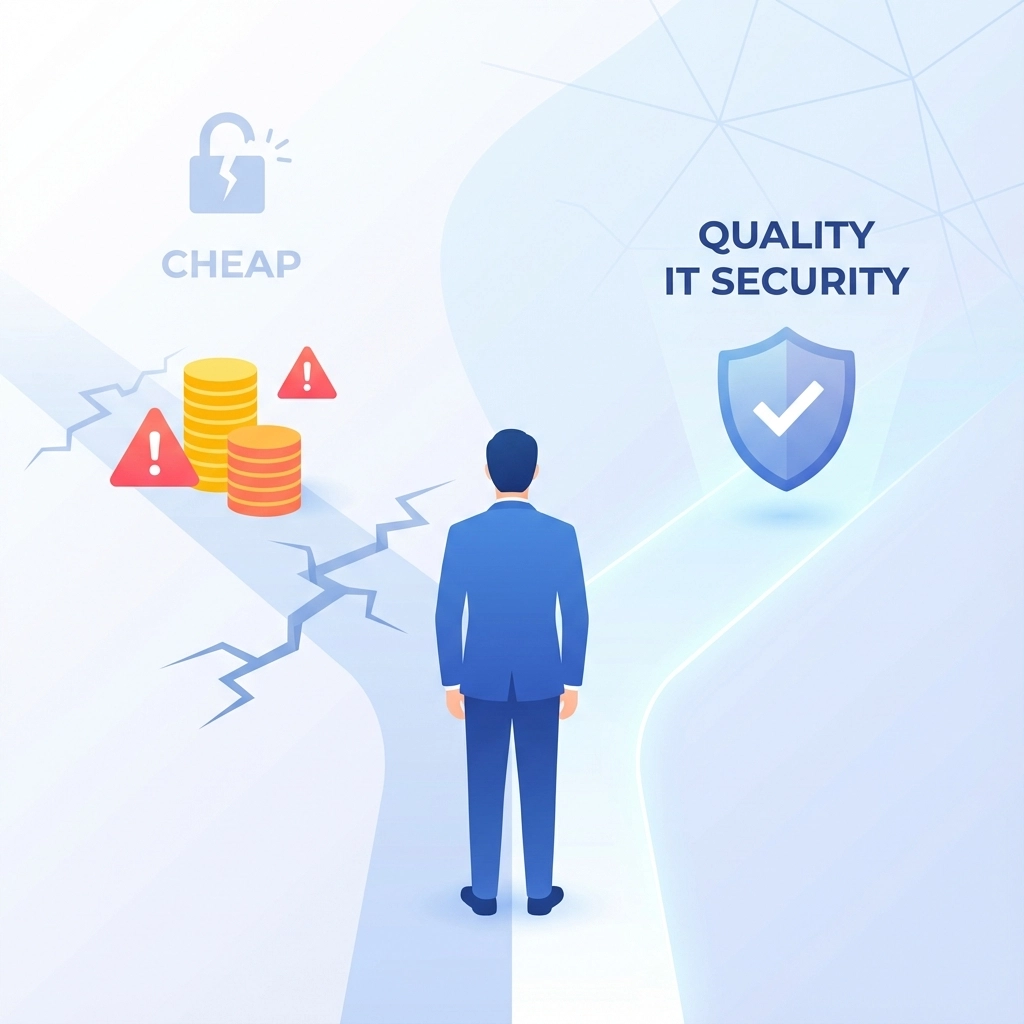
The real cost of cheap IT support:
- Longer resolution times (costing you productivity)
- Higher risk of security breaches
- Hidden charges that weren't mentioned upfront
- Staff frustration leading to decreased morale
Instead of asking "what's the cheapest option?", ask "what's the best value for money?" A slightly higher monthly investment often saves thousands in the long run.
Mistake #2: Ignoring Security in the Rush to Save
Here's a scary statistic: 60% of UK small businesses that suffer a cyber attack go out of business within six months. Yet we still see companies choosing IT providers without properly vetting their security credentials.
Your IT provider should be treating your data like their own family's safety depends on it. That means:
- Proper backup systems (not just storing everything in one place)
- 24/7 monitoring for suspicious activity
- Regular security updates applied promptly
- GDPR compliance that's actually implemented, not just talked about
- Cyber insurance and clear incident response plans
Don't be afraid to ask tough questions about security. If a provider gets defensive or can't give you straight answers about their security practices, that's a red flag the size of Big Ben.
Mistake #3: Vague Agreements and Woolly SLAs
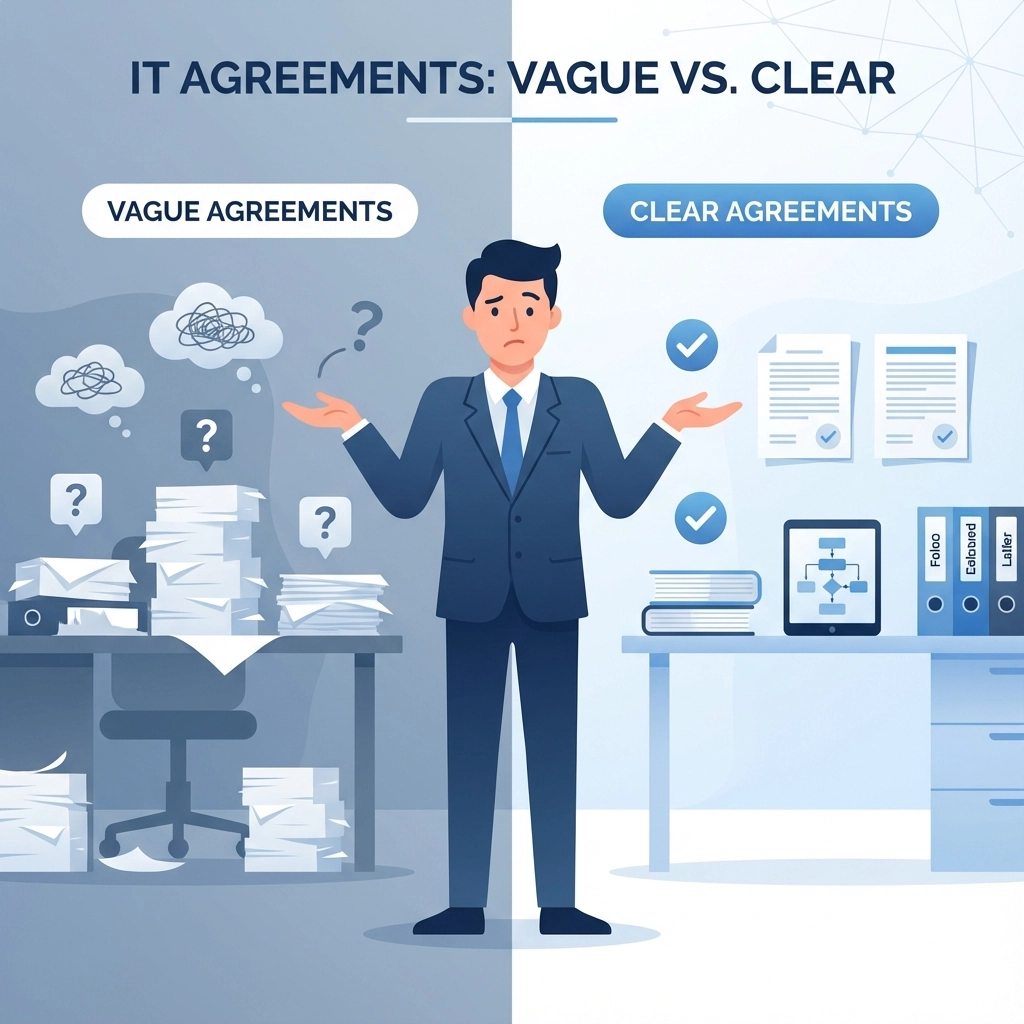
"We'll fix everything quickly" isn't a service level agreement – it's wishful thinking. Too many businesses sign up with providers without clear, measurable commitments about response times, resolution targets, and what "support" actually includes.
A proper SLA should specify:
- Response times for different priority levels
- Resolution targets that are realistic but firm
- What's included and what costs extra
- Escalation procedures when things go wrong
- Penalties if they don't meet their commitments
If your current provider can't tell you exactly what you're getting for your money, it might be time for a conversation.
Mistake #4: The "Set It and Forget It" Mentality
Outsourcing your IT doesn't mean outsourcing your responsibility for it. We've seen businesses hand over their entire IT infrastructure and then wonder why costs spiralled or security wasn't up to scratch.
You should still be involved in major decisions about your technology. A good IT provider will keep you informed about:
- Upcoming changes to your systems
- Security threats relevant to your industry
- Cost implications of new requirements
- Performance metrics so you know what you're getting
The best partnerships are collaborative, not hands-off.
Mistake #5: Failing to Plan for the Unexpected
What happens if your IT provider goes bust? Or if their main engineer leaves? Or if there's a major outage during your busiest period? Many businesses don't think about contingency planning until it's too late.
Your IT support arrangement should include:
- Business continuity plans for various scenarios
- Documentation of your systems and configurations
- Multiple contact points (not just one person who knows everything)
- Clear ownership of passwords, licences, and accounts
The Security vs Savings Balance: Getting It Right
Here's the million-pound question: how do you balance cost-effectiveness with security? The answer isn't about choosing one over the other – it's about understanding the real value of what you're buying.
Think total cost of ownership, not just monthly fees. A provider charging £300/month with robust security, proactive monitoring, and quick response times is better value than one charging £100/month who leaves you vulnerable to attacks.
Consider the cost of downtime. If your business loses £500 per hour when systems are down, paying extra for faster response times is a no-brainer.
Factor in compliance requirements. GDPR fines can be devastating. Investing in proper data protection isn't just smart – it's essential.

Red Flags to Watch Out For
When evaluating IT providers, these warning signs should make you think twice:
- Reluctance to discuss security measures in detail
- Vague pricing with lots of "extras" that aren't explained upfront
- No local presence or UK-based support team
- Poor references or reluctance to provide them
- High-pressure sales tactics or contracts that lock you in unnecessarily
- One-size-fits-all solutions without understanding your specific needs
What Good IT Outsourcing Looks Like
The best IT partnerships feel more like having an extension of your team than dealing with a faceless supplier. You should expect:
Honest communication about what you actually need (not what they want to sell you)
Flexible support that adapts to your business patterns – including proper out-of-hours coverage when you need it
Transparent pricing with no nasty surprises
Proactive maintenance that prevents problems rather than just fixing them
Regular reviews to ensure you're still getting value for money
Local expertise that understands UK regulations and business practices
Making Smarter IT Decisions in 2026
The IT landscape is evolving rapidly, and your support needs are probably different from what they were even two years ago. Cloud adoption, remote working, AI integration, and increasing cyber threats all mean your IT strategy needs to be more sophisticated than ever.
Don't let the complexity intimidate you into making hasty decisions. Take time to properly evaluate your options, ask the right questions, and choose partners who prioritise your long-term success over their short-term profits.

Moving Forward: Your Next Steps
If you're currently unhappy with your IT support or considering a change, start by auditing what you actually need. Look at your current pain points, future growth plans, and security requirements. Then have honest conversations with potential providers about how they'd address these specific challenges.
Remember, switching IT providers doesn't have to be disruptive if it's planned properly. The right partner will make the transition smooth and transparent.
At Your IT Specialist, we've built our reputation on providing impartial advice and honest recommendations – even when it means suggesting something that earns us less money. We believe in building long-term relationships based on trust, not just quick sales.
Whether you're looking for a complete IT overhaul or just want an honest second opinion on your current setup, we're here for a no-pressure conversation. Sometimes a quick chat can save you thousands in avoided mistakes.
Ready to make smarter IT decisions? Get in touch for an impartial consultation – we promise to tell you what you need to hear, not just what we think you want to hear.
