
Let's be real: finding an IT outsourcing partner we can actually trust feels a bit like dating. There's the initial excitement, the promises, and then… sometimes the slow realisation that things aren't quite what they seemed.
For growing businesses, getting this decision wrong isn't just frustrating. It can cost us time, money, and a whole lot of headaches. The good news? With the right approach, we can spot the genuine partners from the ones who are just telling us what we want to hear.
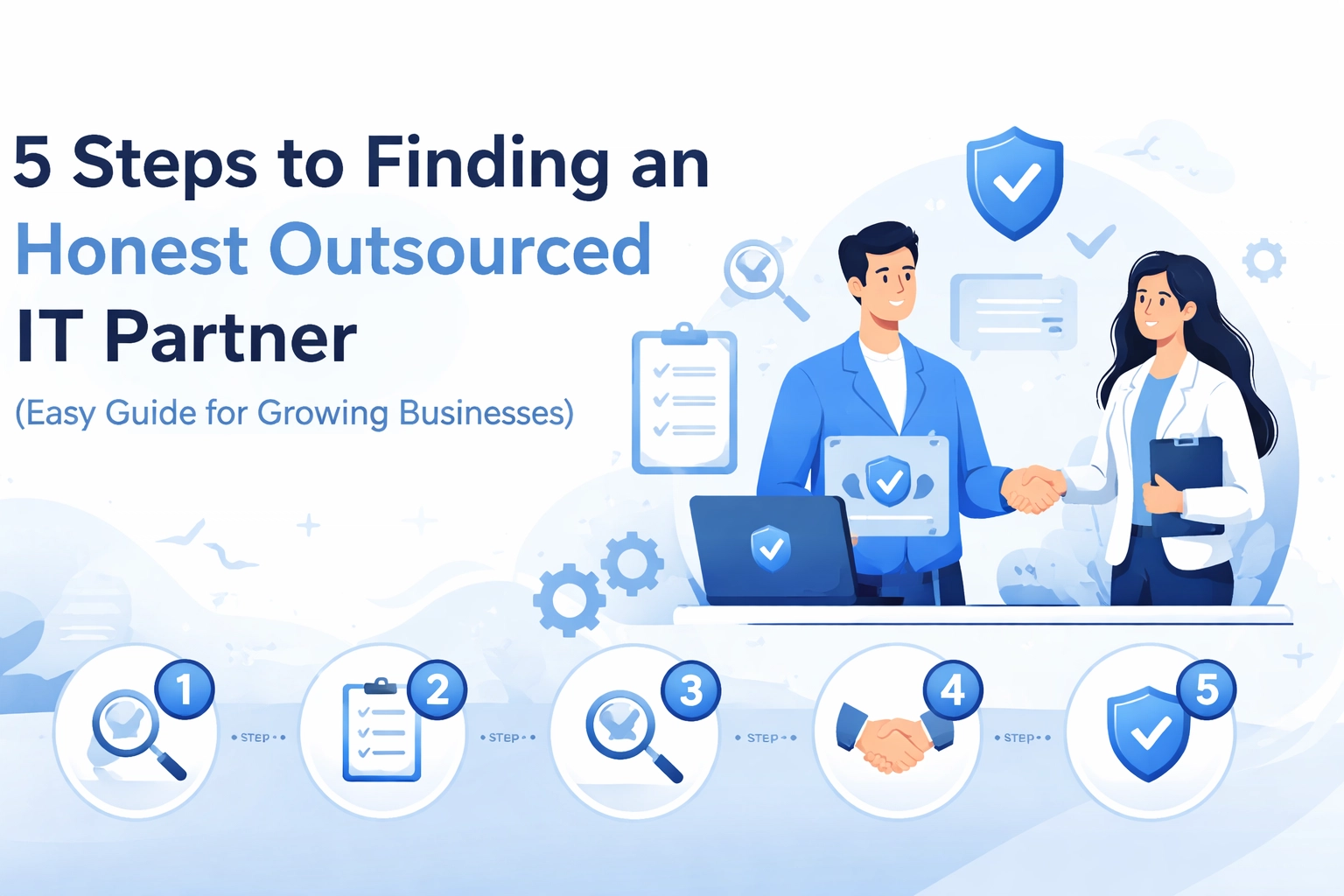
Here's our straightforward guide to finding an outsourced IT partner who's actually in it for the long haul.
Why Honesty Matters More Than Ever in IT Outsourcing
Before we dive into the steps, let's talk about why this matters so much.
IT outsourcing has become essential for businesses that want to stay competitive without building massive in-house teams. But the industry has its fair share of providers who overpromise, underdeliver, or lock us into solutions we don't actually need.
An honest partner won't just fix our tech problems: they'll help us make smart decisions, even if that means recommending a solution that doesn't benefit them directly. That's the kind of relationship that actually helps our business grow.

Step 1: Get Crystal Clear on What We Actually Need
This might sound obvious, but it's where most of us go wrong. We jump into conversations with IT providers before we've properly figured out what we're looking for.
Start by asking ourselves:
- What specific IT tasks or projects do we need help with?
- Are we looking for ongoing support, a one-off project, or both?
- What's our realistic budget, including setup costs and monthly fees?
- Do we need out-of-hours coverage for our team or customers?
When we're clear on our needs, it becomes much easier to spot when a provider is trying to sell us something we don't need. If they're pushing enterprise-level solutions when we're a 15-person company, that's a red flag.
A good partner will ask us plenty of questions before making recommendations. If they're jumping straight to solutions without understanding our situation, we might want to keep looking.
Step 2: Dig Into Their Track Record
Experience matters: but it's not just about how long a company has been around. We want to know if they've worked with businesses like ours.
Here's what to look for:
- Industry experience: Do they understand the specific challenges in our sector?
- Company size fit: A provider used to working with large enterprises might not give a smaller business the attention it needs (and vice versa).
- Technical expertise: Can they actually deliver on the technologies we need?
Don't be shy about asking for specifics. A trustworthy partner will happily share examples of similar projects they've handled. If they're vague or defensive about their experience, that tells us something.

Step 3: Check References (And Actually Call Them)
Reviews and testimonials are helpful, but nothing beats a real conversation with a past client.
When we reach out to references, ask about:
- How responsive is the team when issues come up?
- Did they stick to timelines and budgets?
- Were there any surprises along the way?
- Would they recommend this partner to others?
Beyond direct references, it's worth checking independent review platforms. Sites like Clutch.co and GoodFirms can give us a broader picture of how a provider operates.
Here's a pro tip: pay attention to how they handle negative feedback. Every company gets the occasional complaint. What matters is whether they respond professionally and work to make things right. That tells us a lot about how they'll treat us when things don't go perfectly.
Step 4: Look for Genuine Transparency in Communication
This is where we separate the honest partners from the ones who just want to close a deal.
Watch out for these warning signs:
- Slow response times during the sales process (it only gets worse after we sign)
- Pressure to make quick decisions
- Reluctance to share their portfolio or case studies
- Vague answers about pricing or what's included
- Unwillingness to discuss their limitations
An honest IT partner will tell us when something isn't their strength. They'll recommend alternatives even if it means pointing us toward a competitor. That kind of provider-agnostic approach might seem counterintuitive for a business, but it builds the kind of trust that leads to long-term relationships.
Communication practicalities matter too:
- Do they have clear channels for support requests?
- What are their response time commitments?
- If there's a time zone difference, are there overlapping hours for real-time collaboration?
- Do they use project management tools that let us track progress?
These might seem like small details, but they make a huge difference in day-to-day working relationships.
Step 5: Get Serious About Security and Contracts
This is the step that's easy to rush through when we're excited about a new partnership. Don't.
On the security side, we need to verify:
- What data protection measures do they have in place?
- Are they compliant with relevant standards (ISO, GDPR, Cyber Essentials)?
- How do they handle access controls and encryption?
- What happens to our data if we end the partnership?
If a provider hesitates to discuss their security practices in detail, that's a significant concern. Our business data and our customers' information are too important to leave to chance.
For contracts, pay close attention to:
- Service Level Agreements (SLAs): What response times and uptime guarantees are we getting?
- Scope of services: What's included, and what costs extra?
- Exit provisions: How easy is it to leave if things don't work out?
- Intellectual property: Who owns what?
A trustworthy partner won't try to lock us into impossible-to-escape contracts. They'll earn our ongoing business by delivering results, not by making it too complicated to leave.

Building a Partnership That Actually Works
Finding the right outsourced IT partner isn't just about ticking boxes. It's about finding a team that genuinely wants to help our business succeed.
The best partnerships we've seen are built on honest conversations from day one. That means being upfront about budgets, expectations, and concerns: and expecting the same in return.
When we find a partner who gives us straight answers, admits their limitations, and focuses on what's actually best for our business, we've found something valuable. Those relationships tend to last for years, not months.
Ready to Start the Search?
If we're looking for an IT outsourcing partner who values honesty over sales tactics, it's worth taking the time to do this properly. The five steps above won't guarantee a perfect match, but they'll help us avoid the common pitfalls.
For more guidance on making smart IT decisions, check out our guide on choosing the best IT outsourcing model for your business or learn about common IT outsourcing mistakes to avoid.
And if we'd like to chat about what honest IT support actually looks like, we're always happy to have that conversation: no pressure, no hard sell. Just straightforward advice about what might work best for our situation.
