For many businesses, IT is still viewed as a necessary cost. Budgets are approved to replace ageing equipment, resolve faults and keep systems running.
That approach is understandable. Reliable IT support matters. But it can leave us focused on today’s problems instead of tomorrow’s opportunities.
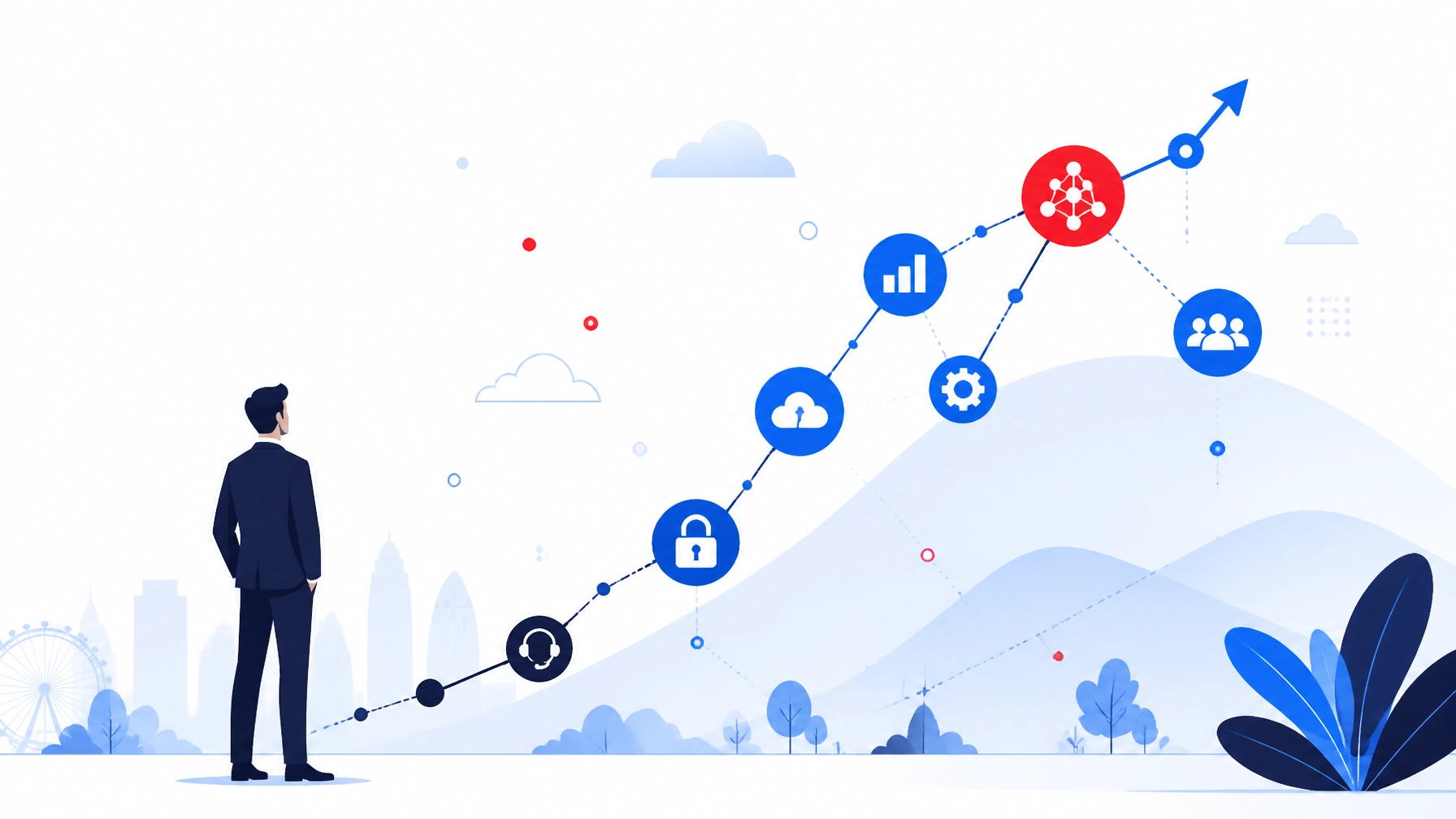
Strategic IT consulting changes the conversation. Rather than only asking how we can fix an issue, we ask how technology can help the business work better, serve customers faster and grow with less friction.
This means moving beyond reactive helpdesk firefighting. It means combining practical IT support, long-term planning, automation, security and clear business goals.
The limits of reactive IT support
Reactive support has an important role. When a server fails or a user can’t access a key application, we need a fast and effective response.
The challenge comes when every IT decision is driven by the latest urgent issue.
This often leads to:
- Repeated faults that are never fully investigated
- Systems that don’t work well together
- Manual tasks that consume staff time
- Technology purchases based on habit or supplier preference
- Security improvements being delayed
- Projects being started without a clear outcome
The business may stay operational, but it doesn’t always move forward.
A strategic approach adds planning to day-to-day support. We still resolve faults quickly, but we also look for patterns, risks and opportunities. A recurring issue may point to an outdated system. A slow process may be suitable for automation. A planned upgrade may prevent disruption later.
This is where IT support becomes more valuable. It stops being only a response service and becomes part of the way the business improves.
Technology should support business goals
Technology has value when it improves a business outcome.
That outcome could be:
- Reducing the time needed to complete an order
- Helping staff collaborate across locations
- Improving customer response times
- Supporting a new site or service
- Reducing errors in financial or customer data
- Protecting the business from avoidable disruption
- Giving leaders better information for decisions
The technology itself is only part of the answer. A new platform won’t create value if it isn’t configured properly, understood by staff or connected to the wider workflow.
Strategic IT consulting starts with the business question. What are we trying to achieve? Where are delays happening? Which risks could affect growth? Which systems are essential?
The answers then guide the technology decisions.
Research from the Office for National Statistics found that technology adopters had 19% higher turnover per worker, even after other factors were considered. This doesn’t mean that buying technology automatically creates growth. It shows that effective adoption can be linked to stronger business performance.
The focus, therefore, shouldn’t be on buying more tools. It should be on using the right tools well.

Build a technology roadmap
A technology roadmap gives us a practical view of where the business is now and where it needs to go.
It should consider:
-
Current systems
Which hardware, software, networks and cloud services do we rely on? -
Business priorities
What needs to improve over the next 12, 24 or 36 months? -
Risks and constraints
Are there unsupported systems, security gaps, budget limits or skills shortages? -
Planned changes
Are we opening a site, adding staff, moving to the cloud or introducing new services? -
Project priorities
Which changes will deliver the greatest benefit with the least unnecessary disruption?
A roadmap helps us avoid two common problems. The first is postponing important improvements until they become emergencies. The second is investing in technology because it sounds impressive rather than because it solves a real business problem.
The roadmap doesn’t need to be complicated. A clear list of priorities, timescales, dependencies and expected outcomes can be enough.
It should also remain flexible. Business needs change, so the roadmap should be reviewed regularly rather than treated as a fixed document.
Use automation to release capacity
Automation is one of the clearest ways technology can support growth.
Many businesses still spend valuable time on repeatable tasks such as:
- Moving information between systems
- Creating standard reports
- Sending routine notifications
- Approving simple requests
- Managing customer or CRM records
- Processing documents
- Provisioning user accounts
- Checking for routine system conditions
These tasks may seem small individually. Together, they can take hundreds of hours each year.
Automation can reduce manual effort and help prevent avoidable errors. More importantly, it gives people more time for work that needs judgement, creativity and customer focus.
This doesn’t mean every process should be automated. A good consultant helps us identify where automation is safe, useful and affordable. We can then improve the process before adding technology to it.
That order matters. Automating a confusing or inefficient process may only make the confusion happen faster.
Your IT Specialist supports outsourced project development, including business process analysis, custom applications, cloud applications and workflow automation solutions. This lets us consider the full process rather than adding another disconnected tool.

Choose technology without supplier pressure
Technology decisions can be difficult. Suppliers naturally know their own products best, but a product that suits one business may not suit another.
Provider-agnostic IT consulting gives us an independent view.
This means comparing options based on:
- Business fit
- Total cost over time
- Ease of use
- Integration with existing systems
- Security and resilience
- Support requirements
- Scalability
- Exit options if our needs change
The most expensive solution isn’t always the best. The cheapest solution may create hidden costs through poor support, limited features or difficult migration.
Impartial advice helps us make decisions that fit the business rather than decisions driven by a particular vendor’s sales model.
At Your IT Specialist, we take a provider-agnostic approach. We focus on finding a solution that makes sense for the client and supports a long-term working relationship.
Treat security as an enabler of growth
Security is sometimes viewed as a cost that slows the business down. In practice, good security helps us operate with confidence.
A secure foundation supports:
- Safer remote and hybrid working
- More reliable access to essential systems
- Better protection for customer information
- Reduced risk of unplanned downtime
- Stronger supplier and client relationships
- More confident adoption of cloud services
The National Cyber Security Centre’s small business guidance highlights practical controls such as backups, secure configuration, malware protection and security updates.
These measures don’t need to be treated as separate technical projects. They can form part of the wider technology roadmap.
A strategic review can identify where security, continuity and growth overlap. For example, replacing an unsupported server may improve security while also creating a more flexible platform for new applications.
Our cyber-security services cover areas including firewalls, patch management, vulnerability assessments, endpoint protection, cloud security and incident recovery.

Measure value in business terms
IT success shouldn’t be measured only by the number of tickets closed or devices installed.
Those measures are useful, but leaders also need to understand the wider impact.
We can measure progress through:
- Reduced downtime
- Faster task completion
- Fewer recurring incidents
- Lower support costs
- Improved customer response times
- More reliable reporting
- Faster staff onboarding
- Reduced security exposure
- Successful delivery of business projects
The right measures depend on the organisation. A manufacturer may focus on operational continuity. A professional services firm may prioritise collaboration and data access. A growing business may need scalable systems and faster onboarding.
Strategic consulting connects IT activity to these outcomes. This makes it easier to decide what should happen next and whether an investment is delivering the expected value.
A practical path beyond the helpdesk
We don’t need to transform everything at once. A practical first step is to review the current position and agree on a small number of priorities.
A useful process could be:
-
Review the current environment
Document key systems, risks, recurring problems and business dependencies. -
Speak with business teams
Understand where staff lose time and where customers experience delays. -
Set clear priorities
Separate urgent fixes from important improvements and longer-term opportunities. -
Identify automation opportunities
Start with repeatable tasks that are easy to measure and low risk. -
Create a staged roadmap
Plan improvements around budget, resources and operational needs. -
Review progress regularly
Adjust the roadmap as the business, technology and risks change.
This approach keeps IT practical. It also helps us make steady progress without introducing unnecessary disruption.
Turning IT into a growth engine
IT will always require investment. The aim isn’t to pretend otherwise. The aim is to make sure that investment creates useful business value.
With the right planning, technology can reduce friction, improve resilience and give teams more capacity. It can support new services, better customer experiences and more confident growth.
That requires more than a helpdesk. It requires clear advice, thoughtful planning and technical support that understands the wider business context.
If we’re ready to review how technology supports our next stage of growth, contact Your IT Specialist for an open conversation. We’ll start with the business need, assess the available options and help build a practical way forward.
