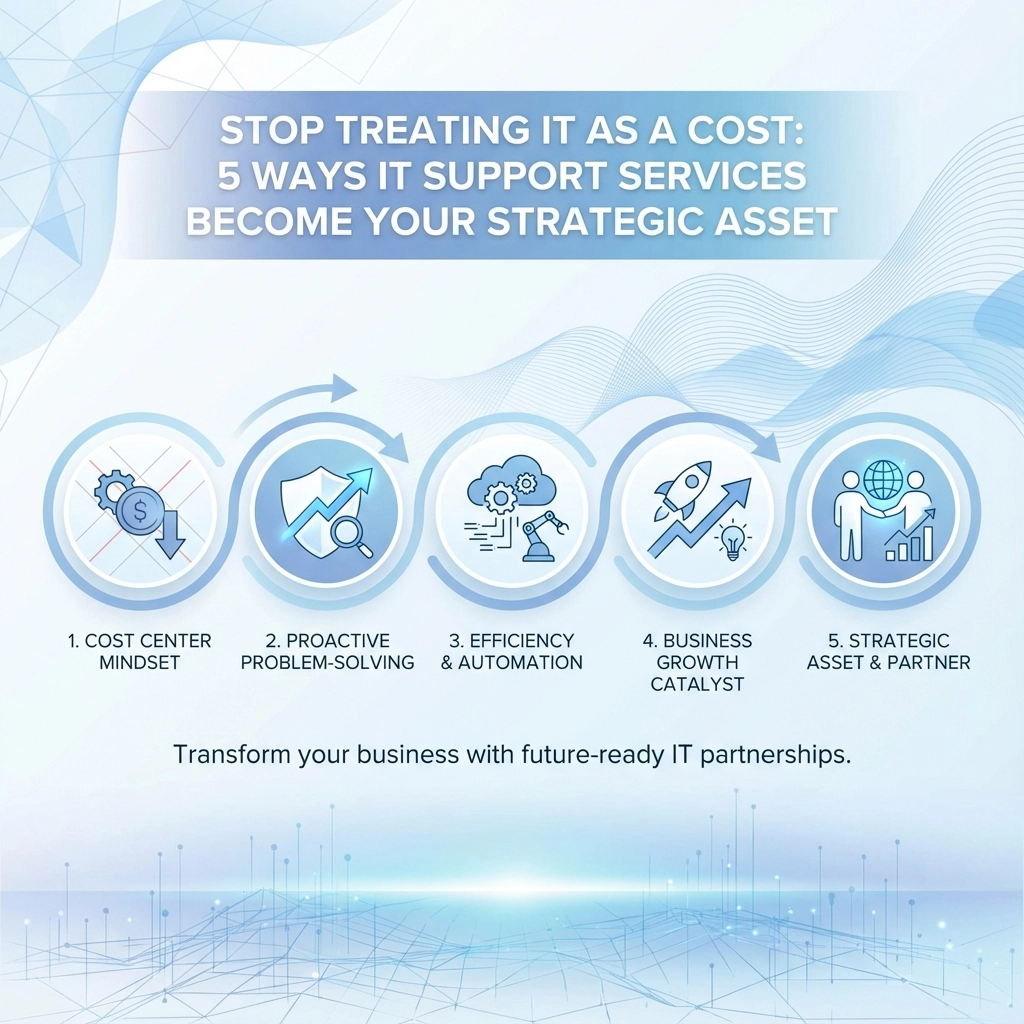
Most business owners see IT the same way they view rent or insurance: a necessary evil that drains the budget. But here's the thing: when we shift from thinking about IT as an expense to viewing it as a strategic asset, everything changes.
The businesses thriving in 2026 aren't the ones spending the least on IT. They're the ones getting the most value from their technology investments. Let's explore how proper IT support transforms from a cost center into your competitive advantage.
1. Cost Optimization That Actually Saves Money
The average business wastes about 30% of its IT budget on unused software licenses, outdated hardware, and inefficient processes. That's not a typo: we're talking about real money sitting unused in digital drawers.
Professional IT support doesn't just fix problems; it identifies waste before it happens. When we audit a client's systems, we commonly find:
- Software licenses bought but never deployed
- Multiple subscriptions for similar services
- Hardware that's over-specified for actual needs
- Cloud resources running 24/7 for 9-5 operations

One client was paying for 50 Adobe licenses when only 12 employees actually used the software. Another had three different video conferencing platforms because different departments made separate purchases. These aren't unusual cases: they're the norm.
Strategic IT support includes asset management that tracks every license, subscription, and piece of hardware. This visibility typically saves clients 20-40% on their IT expenses in the first year alone. That's not cutting corners; it's cutting waste.
2. Productivity That Translates to Profit
When we treat IT strategically, we stop asking "What's the cheapest solution?" and start asking "What solution helps our team work better?"
Consider this scenario: your team spends 30 minutes each morning waiting for computers to start, applications to load, and files to sync. For a 10-person team, that's five hours of lost productivity daily. Over a year, you're looking at nearly 1,300 hours: equivalent to hiring another part-time employee.
Strategic IT support focuses on:
- Proactive maintenance that prevents slowdowns
- Optimised workflows that eliminate repetitive tasks
- Reliable systems that don't break during critical moments
- Remote access that keeps teams productive anywhere
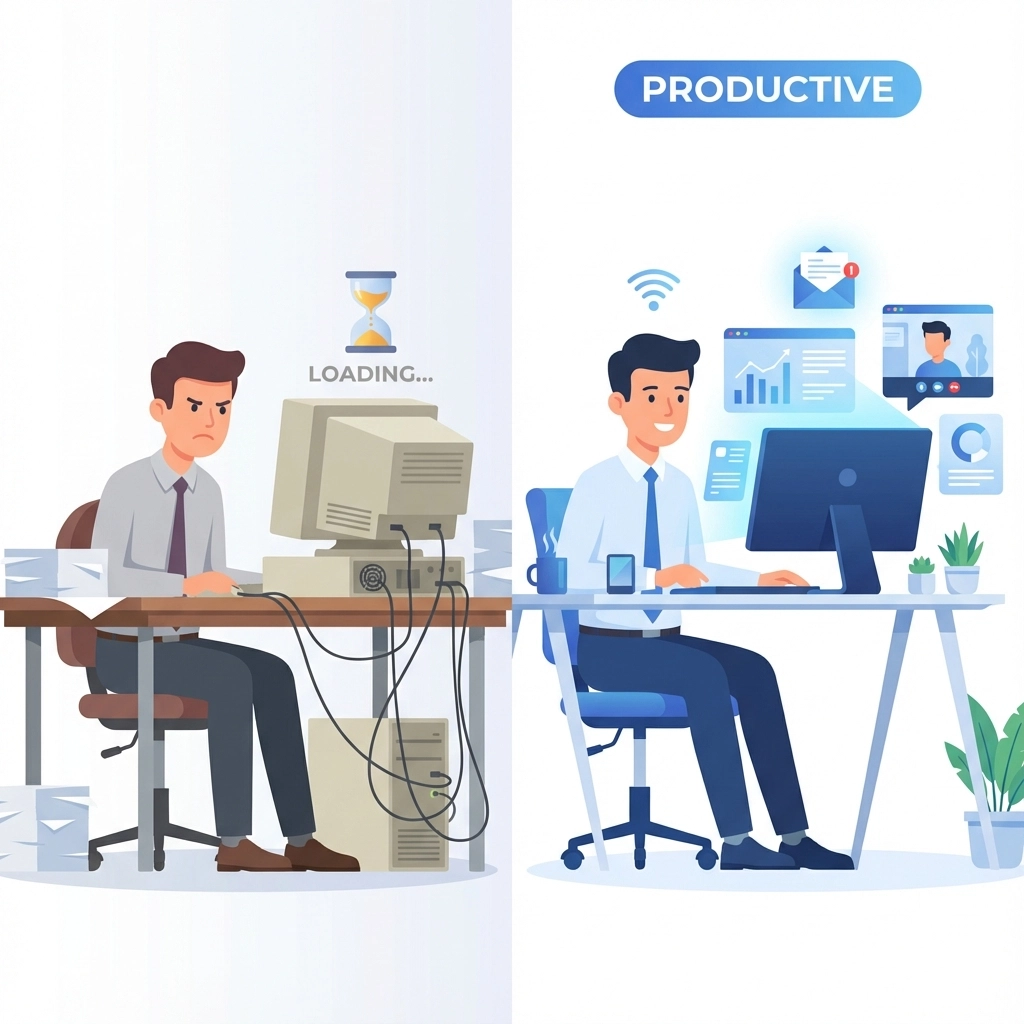
The return on investment isn't just in avoided downtime. It's in the confidence your team has in their tools, the speed they can complete tasks, and the professional impression you make on clients when everything simply works.
3. Data-Driven Decision Making
We can't manage what we can't measure. Strategic IT support provides the visibility needed to make informed decisions about technology investments.
Instead of guessing when to replace hardware or whether that new software is worth the investment, you get real data. Which applications are actually being used? Where are the bottlenecks in your workflows? What's causing the most support tickets?
This insight transforms budgeting from guesswork into strategic planning. Rather than emergency purchases when equipment fails, we can plan replacements before performance degrades. Instead of buying software based on marketing promises, we can test and measure actual impact on productivity.
Professional IT support includes monitoring and reporting that turns your technology into a source of business intelligence. You'll know which investments are paying off and which ones need adjustment.
4. Risk Management That Protects Your Future
Cyber security isn't just about preventing breaches: though that's certainly important. It's about protecting the foundation your business is built on.
When we treat IT strategically, security becomes proactive rather than reactive. This includes:
- Regular backups that actually get tested
- Network monitoring that spots threats before they spread
- Employee training that prevents most security incidents
- Compliance management that keeps you audit-ready

But strategic risk management goes beyond cyber security. It includes business continuity planning, disaster recovery testing, and ensuring your technology can scale with growth rather than becoming a bottleneck.
The businesses that struggle aren't usually the victims of sophisticated attacks. They're the ones that lose critical data because backups weren't working, or can't operate because their single server failed, or waste weeks recovering from a simple malware infection that could have been prevented.
5. Strategic Alignment With Business Goals
Here's where IT support truly becomes strategic: when technology decisions align with business objectives rather than just technical requirements.
Strategic IT support means understanding your business well enough to recommend solutions that support your goals. Planning to expand to new locations? We'll ensure your network infrastructure can handle it. Looking to improve customer service? We'll explore how technology can streamline those processes.
This approach looks at the total cost of ownership over time, considers how solutions will scale, and ensures new technology integrates with existing systems rather than creating silos.
For example, instead of simply recommending the cheapest cloud storage, strategic IT support considers:
- How much will storage needs grow?
- What compliance requirements apply?
- How will this integrate with existing workflows?
- What's the long-term cost as the business scales?
Making the Shift
The transition from viewing IT as a cost to leveraging it as a strategic asset doesn't happen overnight. It requires working with IT professionals who understand business strategy, not just technology.
Look for IT support that includes:
- Regular strategic reviews of your technology landscape
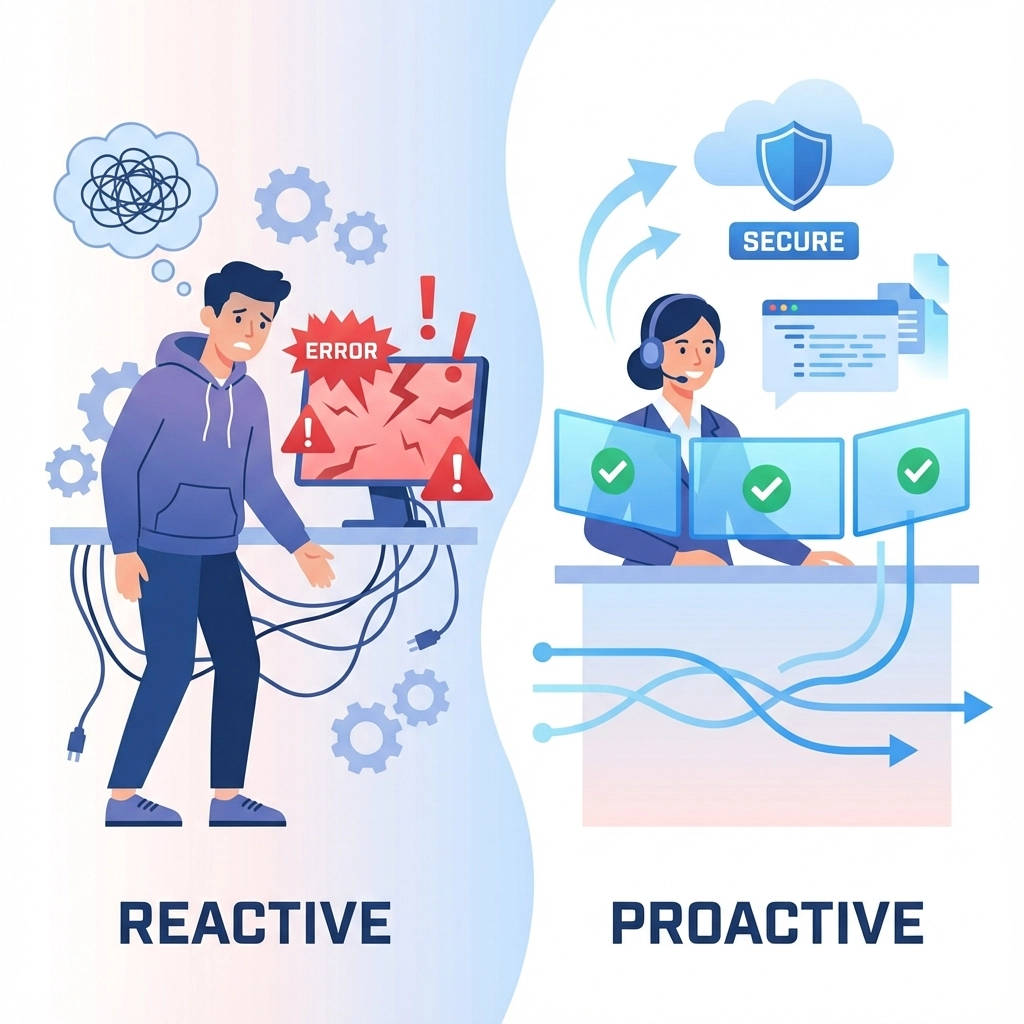
- Proactive planning rather than just reactive support
- Clear metrics that demonstrate value and ROI
- Business expertise alongside technical knowledge
The goal isn't to spend more on IT: it's to spend smarter. Strategic IT support often costs less than the traditional break-fix model when you factor in prevented downtime, eliminated waste, and improved productivity.
The Bottom Line
Technology isn't going anywhere. The question isn't whether to invest in IT, but how to make those investments work harder for your business.
Companies that treat IT strategically don't just save money: they use technology to create competitive advantages, improve customer experiences, and enable growth that wouldn't be possible otherwise.
Ready to transform your IT from a cost center into a strategic asset? Get in touch to discuss how professional IT support can drive real business value for your organisation.
The businesses winning in 2026 aren't the ones with the biggest IT budgets. They're the ones making the smartest technology decisions. Which category will your business be in?