
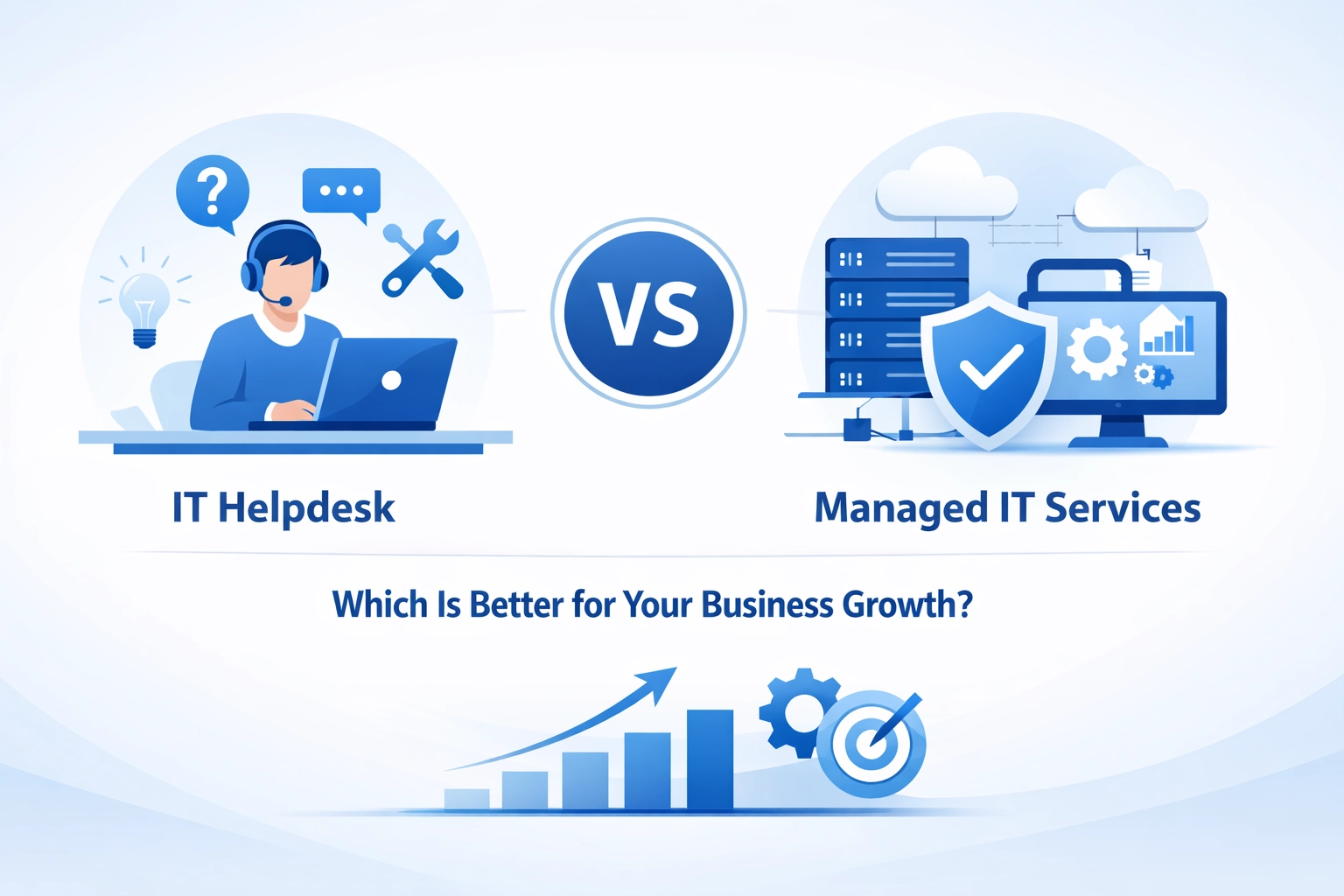
Here's the thing about growing businesses, technology can either accelerate our progress or slam the brakes on everything we're trying to achieve. The support model we choose makes all the difference.
Most of us have experienced both sides of this. There's the helpdesk approach where we ring someone when things break, and there's managed IT services where someone's already watching our systems before problems even start. But which one actually helps us grow faster?
Let's break this down without the jargon.
What We're Actually Comparing
An IT helpdesk is basically a reactive support team. Something breaks, we call them, they fix it. It's straightforward, we pay for what we use, when we use it. Think of it like calling a plumber when a pipe bursts.
Managed IT services work differently. It's more like having a maintenance team that checks our pipes regularly, spots potential issues before they become floods, and has a plan ready if something does go wrong. They're monitoring our systems continuously and working to prevent problems rather than just fixing them.
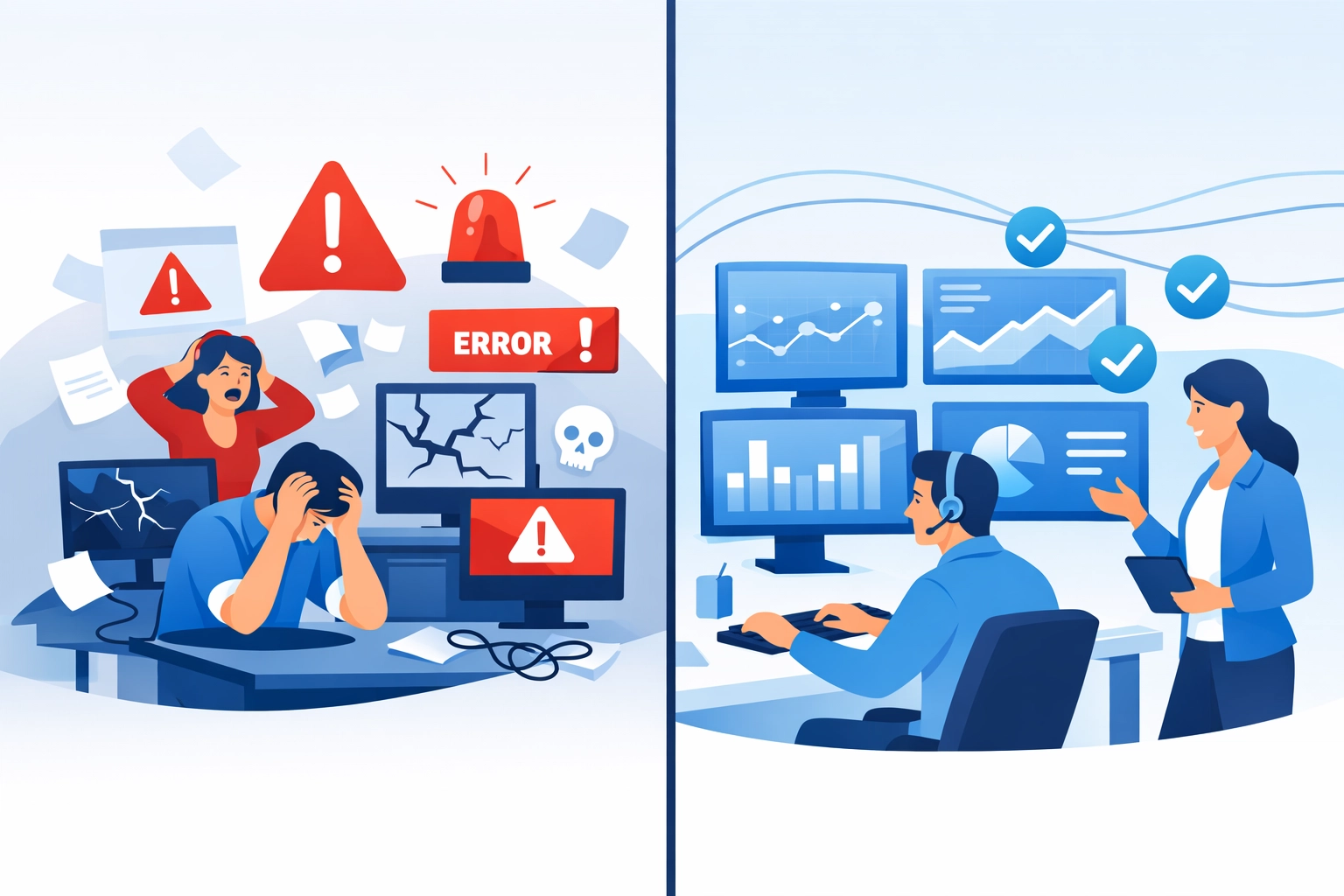
Neither approach is inherently "wrong", they just serve different needs. The question isn't which is better overall, but which is better for where we're trying to go.
The Reactive vs Proactive Reality
Here's where things get interesting. With a traditional helpdesk, we're essentially playing defense. An email server goes down at 3pm on a Tuesday? We call for help. Staff can't access shared files? Another call. Each incident creates downtime, disrupts workflow, and costs us in ways that aren't immediately obvious.
When we're small and systems are simple, that's manageable. But as we grow, the stakes change completely.
Managed services flip this model. Systems are monitored 24/7, which means potential failures get caught before they impact our team. That server issue? It's detected and resolved at 2am before anyone even arrives at the office. The storage running low? It's expanded before we hit capacity limits.
The difference compounds as we scale. Five employees affected by downtime is one thing. Fifty employees? That's a different conversation with finance about lost productivity.
The Real Cost Conversation We Need to Have
Let's talk money, because that's usually where this decision gets made.
IT helpdesk support feels cheaper upfront. We're only paying when we need help, right? No monthly commitment, no ongoing costs. But here's what we've learned from working with hundreds of businesses, unpredictable IT costs are rarely cheaper in the long run.

Think about it this way: One major incident that takes down our systems for half a day can cost more than several months of managed services. And that's just the direct cost, we're not even counting the opportunities we miss or the customers we disappoint when we're offline.
Managed IT services operate on a fixed monthly fee. We know exactly what we're spending, which makes budgeting actually possible. Research suggests that over a typical three-year period, managed services can cost roughly 40% less than maintaining equivalent in-house support capabilities.
But it's not just about total cost, it's about predictability. Finance teams love predictable costs. Growth plans need predictable costs. We can't scale confidently when we don't know if next month's IT bill will be £500 or £5,000.
When We're Not in the Office (But Still Need IT)
Here's a scenario we've all lived through: It's Friday at 6pm, everyone's gone home, and a critical system fails. Or it's Sunday morning, and we need to access files for a Monday presentation but can't connect remotely.
Traditional helpdesk support typically works business hours, maybe 9-5 on weekdays. Outside those hours? We're often on our own or paying premium rates for emergency support.
Managed services usually include 24/7 coverage with defined response times written into service level agreements. Not as a nice-to-have, but as standard. This becomes crucial as we grow, especially if we're supporting remote teams, have clients in different time zones, or simply can't afford to wait until Monday morning for fixes.

At Your IT Specialist, we've seen this play out countless times. Businesses that operate with out-of-hours support capability grow more confidently because they know systems are protected around the clock. That peace of mind changes how we make decisions about expansion.
The Expertise Gap That Grows With Us
Small businesses can often manage with general IT support. But as we grow, our needs become more specialized. We're implementing collaboration platforms, securing remote access, integrating cloud services, managing compliance requirements.
Helpdesk support is typically single-tier, one team handling everything from password resets to network architecture questions. That works until our requirements outpace their expertise.
Managed IT services bring specialist knowledge across multiple domains. Cybersecurity experts, cloud architects, network specialists, and yes, general support staff too. We're not just getting someone to fix problems: we're getting access to strategic expertise that can guide our technology decisions as we scale.
This matters more than we might think. The difference between good and poor technology decisions compounds over time. Choose the wrong infrastructure approach early, and we'll pay for it (literally and operationally) for years.
Who Should Choose What?
Let's be practical about this.
We might be fine with IT helpdesk support if:
- We're a small team (under 10 people) with straightforward technology needs
- Our systems are simple and we rarely have critical issues
- We have someone internally who can handle first-line support
- Downtime doesn't significantly impact our revenue or operations
- We prefer maintaining complete control over all IT decisions
We probably need managed IT services if:
- We're growing or planning to grow in the next 12-24 months
- We have remote or hybrid workers who need reliable system access
- Downtime directly impacts our ability to serve customers or generate revenue
- We're in a regulated industry with compliance requirements
- Our internal IT team is stretched thin dealing with basic issues instead of strategic projects
- We need specialized expertise we can't afford to hire full-time
And here's something for MSPs reading this: if you're providing services to clients but need additional capacity or specialized skills, partnering with a whitelabel provider can give you managed service capabilities without the overhead of hiring specialists in every domain.
The Growth Factor Nobody Talks About
Here's what we've observed working with businesses at different stages: The companies that scale successfully are the ones where IT enables growth rather than limiting it.
With helpdesk support, we're often working around IT limitations. We can't roll out that new initiative because we're not sure our systems can handle it. We can't open that new location because we need IT on-site for setup and ongoing support.
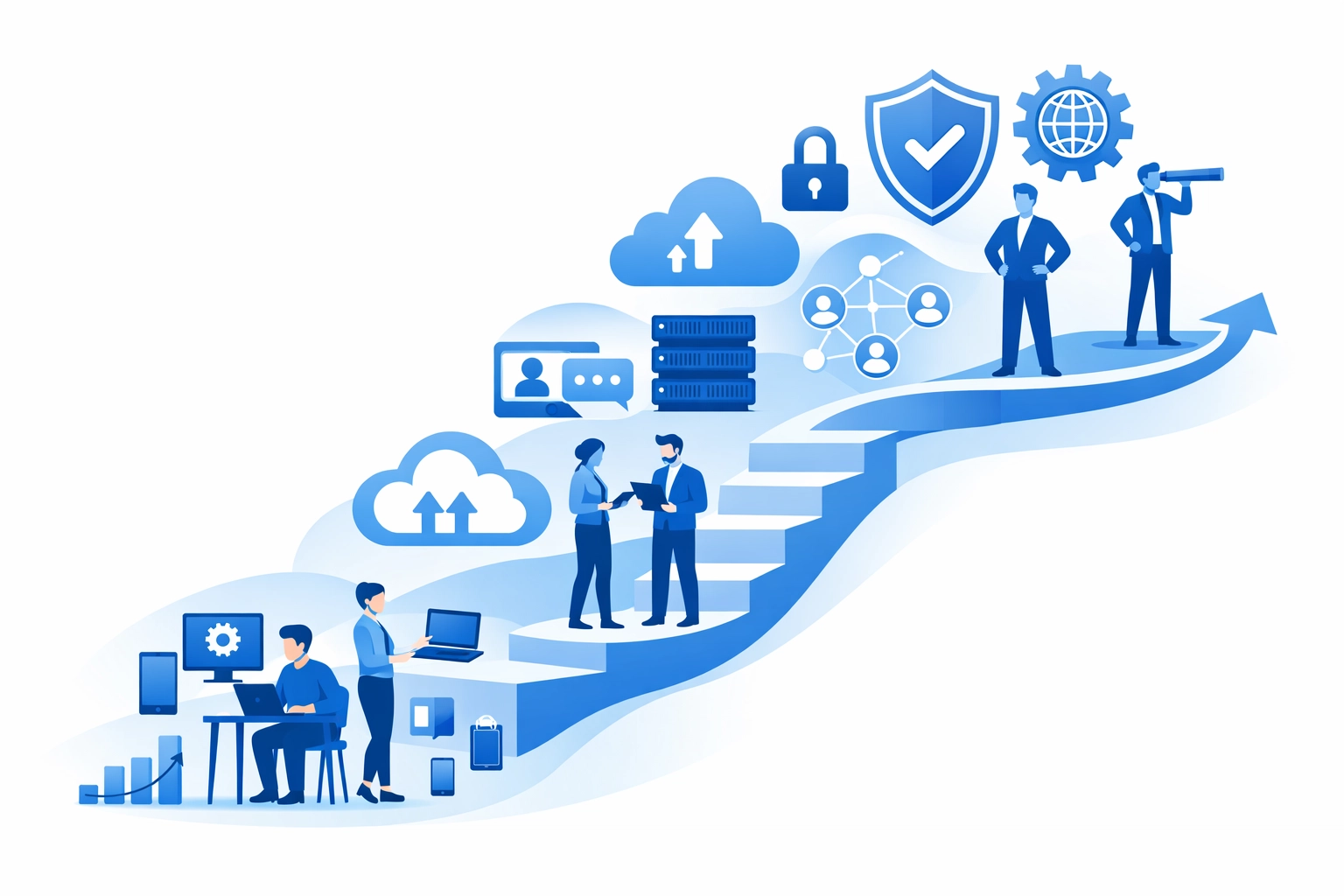
Managed services shift IT from a constraint to an enabler. We're having strategic conversations about where the business is going and how technology can get us there. Systems are monitored and optimized for performance. Security is proactive rather than reactive. When we need to scale up, the infrastructure conversation happens before it becomes urgent.
That's the difference that compounds. We're not just paying for better support: we're investing in the capability to grow without technology becoming the bottleneck.
Making the Right Choice for Right Now
The honest answer is that there's no universal "best" option. What matters is matching the approach to where we are and where we're heading.
If we're genuinely happy with our current IT setup and growth isn't a priority, helpdesk support might serve us well. It's flexible, we only pay for what we use, and we maintain direct control.
But if we're serious about growth: expanding our team, adding locations, improving reliability, or freeing up internal resources for strategic work: managed IT services typically provide better value and capability.
The question we should be asking isn't just "what's this going to cost?" but "what's this going to enable?"
At Your IT Specialist, we work with businesses at every stage, providing provider-agnostic advice on what actually makes sense for their situation. Not what earns us the biggest contract, but what serves their growth objectives. That's the kind of honest, long-term relationship that helps businesses thrive.

Whatever we choose, the key is making an informed decision based on where we're going, not just where we are right now. Because by the time we've outgrown our IT support model, we're already behind.
Need help figuring out which approach makes sense for your business? Get in touch with us: we can walk through your specific situation and provide straightforward recommendations without the sales pressure.
