
Choosing business IT support isn't like picking a coffee blend. Get it wrong, and we're talking lost data, security breaches, and those lovely 3am emergency calls when everything's on fire.
The problem? Most businesses sign contracts based on price alone or slick sales pitches. Then they're stuck with a provider who can't actually deliver what they need.
Let's fix that. Here are the 10 questions we need to ask before signing anything: and why they matter.
1. What Types of IT Support Do You Actually Provide?
This seems basic, but it's amazing how many providers are vague about what they do.
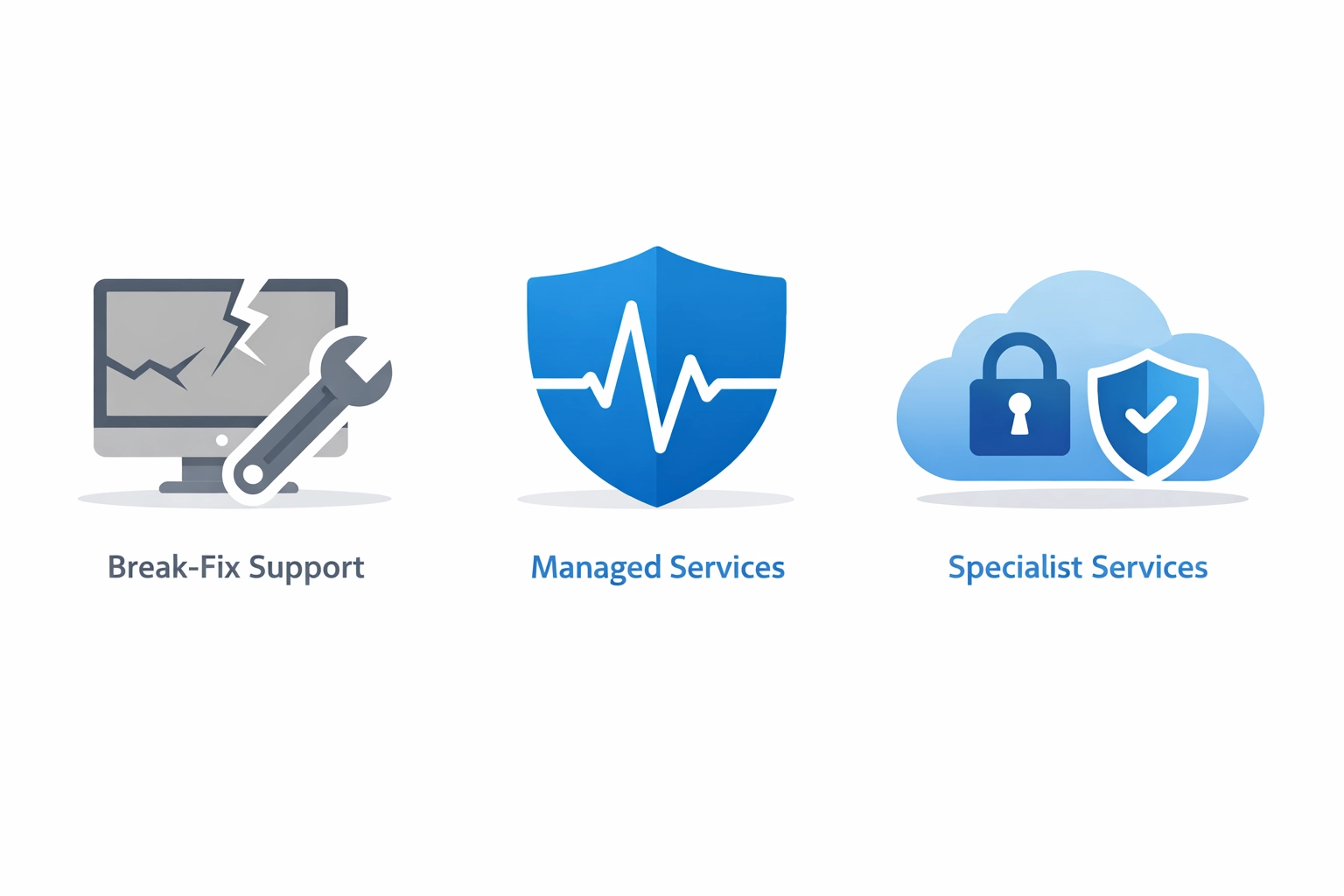
We need clarity on whether they offer:
- Break-fix support (they show up when things break)
- Proactive managed services (they monitor systems to prevent problems)
- Specialist services like cybersecurity, cloud migration, or compliance support
Break-fix might work for a tiny business with simple needs. But most of us need someone watching the store 24/7, catching issues before they become disasters.
If a provider can't clearly explain their service model in plain English, that's a red flag.
2. What Do Your Service Level Agreements Actually Guarantee?
SLAs aren't just corporate waffle: they're legally binding promises about response times and service quality.
We should ask:
- What's the response time for critical issues versus routine requests?
- How are SLAs tracked and reported?
- What happens if they miss their targets?
- Can SLAs be customized for our specific business needs?
A provider who offers out-of-hours support (like, say, at 2am on Sunday) needs to spell that out in the SLA. If it's not in writing, it doesn't exist.
And here's the kicker: what penalties apply if they don't meet their commitments? If there aren't any, the SLA is basically decorative.
3. Do You Have Experience With Businesses Like Ours?
Industry experience matters more than we might think.
A provider who's brilliant with retail systems might not understand the compliance requirements of healthcare or finance. They might not know the specific software our industry depends on.
We should ask for:
- Case studies from similar businesses
- References we can actually contact
- Examples of industry-specific challenges they've solved
This isn't about being difficult: it's about finding someone who already speaks our language and understands our pain points.
4. What Certifications and Vendor Authorizations Do You Hold?
Certifications prove a provider meets specific standards. Vendor authorizations (like Microsoft Partner or Cisco certifications) show they're trained on the systems they'll be supporting.
We're not just looking for alphabet soup after their name. We need to know:
- Are certifications current?
- Does the actual person working on our account hold these qualifications?
- Are they authorized by the vendors whose products we use?
This matters because unauthorized providers can't access certain vendor support channels, which can slow down problem resolution.

5. How Do You Handle Security and Compliance?
In 2026, this isn't optional. We need concrete answers about:
- Firewall and network security approaches
- Multi-factor authentication implementation
- Encrypted backup procedures
- Staff security training
- Compliance with regulations like GDPR or industry-specific requirements
We should also confirm they carry professional liability insurance. If they make a mistake that costs us money or exposes our data, insurance protects everyone.
A provider who gets vague about security practices isn't ready to protect our business.
6. What Happens When Critical Systems Fail?
Everything breaks eventually. What matters is how quickly the provider responds.
We need to understand:
- Emergency response procedures
- Target response time for critical failures (ideally within an hour)
- Remote monitoring and diagnostic capabilities
- Procedures for minimizing downtime
A provider offering genuine out-of-hours support should explain exactly how that works. Do they have staff on call? Is it actually 24/7 or just "reasonable hours"? Who do we contact, and how?
This question reveals whether we're getting real emergency support or just lip service.
7. What's Your Disaster Recovery Plan?
When disaster strikes: ransomware, hardware failure, natural disasters: we need our data and systems back fast.
Critical questions include:
- How often are backups performed?
- Where is backup data stored?
- How quickly can systems be restored?
- Are recovery procedures tested regularly?
A provider who hasn't tested their disaster recovery plan is basically crossing their fingers and hoping. We can't afford hope: we need proven processes.

8. Who Will Actually Work on Our Account?
Here's a common bait-and-switch: we meet senior consultants during sales, then get handed off to junior technicians after signing.
We should clarify:
- Size and structure of their technical team
- Who we'll interact with day-to-day
- Who oversees our account
- Whether they communicate in plain language or technobabble
There's nothing wrong with junior staff handling routine issues, but we need to know senior expertise is available when needed. And we need people who can explain technical issues without making us feel stupid.
9. Can You Support Our Growth Plans?
Our IT needs today aren't our IT needs in two years. A good provider grows with us.
We should ask about:
- Cloud migration support
- System upgrade planning
- Integration of new software or services
- Proactive recommendations for technology improvements
Provider-agnostic advice is gold here. We want someone who recommends the best solution for our business, not whatever vendor pays them the highest commission.
10. What Does Your Contract Include, and What Guarantees Apply?
Finally, let's talk about the fine print. We need to understand:
- What's included in standard pricing versus what costs extra
- Contract length and termination terms
- Guaranteed deliverables
- What happens if guarantees aren't met
- Ongoing support availability (helpdesk hours, response times)
A provider confident in their service won't hide behind vague terms or lock us into inflexible multi-year contracts.
If the contract feels one-sided or unclear, that's our signal to walk away.
The Bottom Line
Choosing business IT support is about finding a long-term partner, not just a vendor. These questions help us cut through sales pitches and evaluate what providers actually deliver.
The right provider will answer these questions confidently and clearly. They won't dodge, deflect, or blind us with jargon. They'll show us exactly what we're getting and stand behind their commitments.
Take the time to ask these questions. Our business's technology: and sanity( depends on getting this choice right.)
