
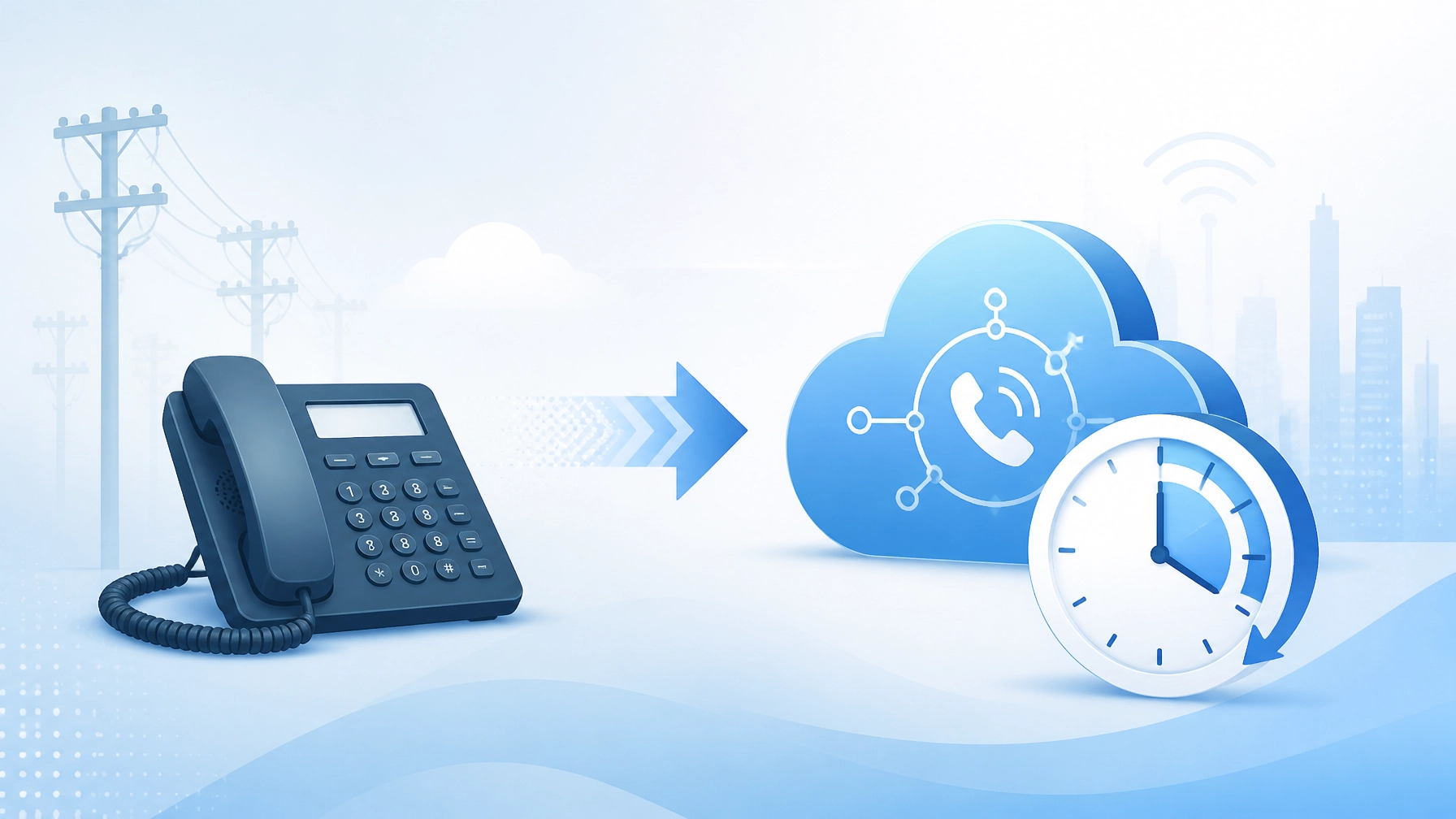
The countdown has officially entered its final phase. As of today, July 18, 2026, we've exactly six months until the Public Switched Telephone Network (PSTN) and ISDN lines are permanently deactivated across the UK. On January 31, 2027, the traditional copper network that's powered business communication for decades will go silent.
While six months might feel like plenty of time, the reality on the ground is more urgent. There are still over 500,000 business lines in the UK relying on legacy technology. As we approach the deadline, engineering capacity is tightening, and the cost of doing nothing is rising sharply. Openreach has already implemented significant price increases throughout 2026: with another 40% jump scheduled for October: to encourage the final wave of migrations.
We don't want your business to face a sudden loss of service or spiralling costs. Transitioning to modern telecommunications and data services isn't just about avoiding a deadline; it's about upgrading to a more flexible, cost-effective way of working.
Here is our three-step plan to ensure your business stays connected.
Step 1: The Full Infrastructure Audit

Most business owners think the PSTN switch-off only affects their desk phones. Unfortunately, the copper network supports far more than just voice calls. If we only look at the handsets, we might miss critical services that keep our buildings safe and our operations running.
The first thing we need to do is identify every single service in our building that uses a traditional phone line. These lines are often hidden in cupboards or connected to devices we rarely interact with.
What to Look For
We should check for these common "hidden" PSTN dependencies:
- Alarm Systems: Many older intruder and fire alarms use a PSTN line to dial out to monitoring centres.
- Lift Emergency Lines: Regulations require lifts to have a working emergency communication line. These are frequently analogue.
- Payment Terminals: Older PDQ/card machines often use a phone line to process transactions.
- Fax Machines: While less common, some industries still rely on faxes that won't work on a digital line without an adapter.
- Door Entry Systems: Apartment blocks or secure offices often use phone lines for intercoms.
We recommend checking your monthly bills for any "analogue line" or "PSTN" charges. If we find these, we need to act now. Since many of these services: like lifts and fire alarms: involve safety regulations, the migration can take longer than a standard phone line switch. We can help with ethernet and copper services diagnostics to ensure nothing is missed during this audit phase.
Step 2: Choosing the Right Digital Alternative

Once we know what needs to move, we have to decide which technology will replace it. There isn't a one-size-fits-all solution, and at Your IT Specialist, we take a provider-agnostic approach. We aren't here to push a specific brand; we're here to find the best fit for your specific workflow.
Generally, we'll choose between two main paths: Hosted VoIP or SIP Trunks.
Hosted VoIP (Cloud PBX)
This is often the best choice for small to medium businesses or those with remote workers. Instead of having a "brain" for your phone system in the office, the system lives in the cloud.
- Pros: No expensive hardware to maintain, easy to add new users, and we can take our office extension anywhere using a mobile app.
- Best for: Hybrid teams, businesses wanting to move away from hardware maintenance, and those with multiple sites.
SIP Trunks
If we've already invested heavily in a modern on-premise phone system (a PBX) that is "IP-ready," we can use SIP Trunks. This essentially replaces the old physical copper lines with a digital connection that runs over our internet.
- Pros: We keep our existing handsets and system features, often resulting in lower immediate hardware costs.
- Best for: Larger offices with functional, modern PBX systems that they aren't ready to replace yet.
We provide impartial telecom support to help weigh these options. We'll look at your current broadband speed and stability first, as your new phone system will only be as good as the internet connection carrying it.
Step 3: Execution, Porting, and Testing

The final step is the actual migration. This is where most businesses feel the most stress, particularly regarding "number porting": the process of moving your existing phone numbers to the new provider.
The Porting Process
We've seen that porting can take anywhere from 7 to 21 days depending on the complexity of the existing contract. If we leave this until December or January, we risk being caught in a massive backlog as thousands of other businesses scramble to meet the deadline.
We should aim to have our porting requests submitted by September 2026 at the latest. This gives us a buffer before the final October price hike and ensures we aren't fighting for engineering time during the winter holiday period.
Rigorous Testing
After the switch, we must test everything immediately. We don't just check if the phones ring; we check:
- Outbound Caller ID: Is it showing the correct business name?
- Emergency Services: Can we still reach 999 and does our location data show up correctly for the operators?
- Hunt Groups: Are calls being routed to the right departments (Sales, Support, Accounts) correctly?
- Non-Voice Services: Did the lift line and the alarm system successfully connect to their new IP converters?
If your internal team is already stretched thin, we offer outsourced project development and whitelabel IT contract services to handle the entire rollout for you. We can manage the vendors, oversee the hardware installation, and ensure a seamless transition without disrupting your staff’s workday.
Why We Can't Wait Until 2027
The January 2027 deadline is a "hard" cut-off. Unlike previous extensions, Openreach and the UK government have been clear that there will be no more delays. By waiting, we're essentially gambling with our business continuity.
Beyond the risk of losing service, the financial argument for moving now is undeniable. Openreach's staged price increases mean that staying on copper will cost significantly more every month between now and January. By migrating to a VoIP or SIP solution today, we can often reduce our monthly telecom spend immediately, while gaining features like video conferencing, call recording, and flexible working.
At Your IT Specialist, we focus on building long-term, honest relationships. We'll give you a straight answer on what you need and what you don't. We can even handle the installation during our Out of Hours Support windows to ensure zero downtime for your team.
The copper is being cut. Let’s make sure we're on the digital side of the line before it happens.
Ready to start your migration? Contact us today for an impartial audit of your current lines and a clear, fixed-price plan to move your business to the cloud.
